Houston, TX
Roof Replacement in Houston, TX: Match with Local Pros
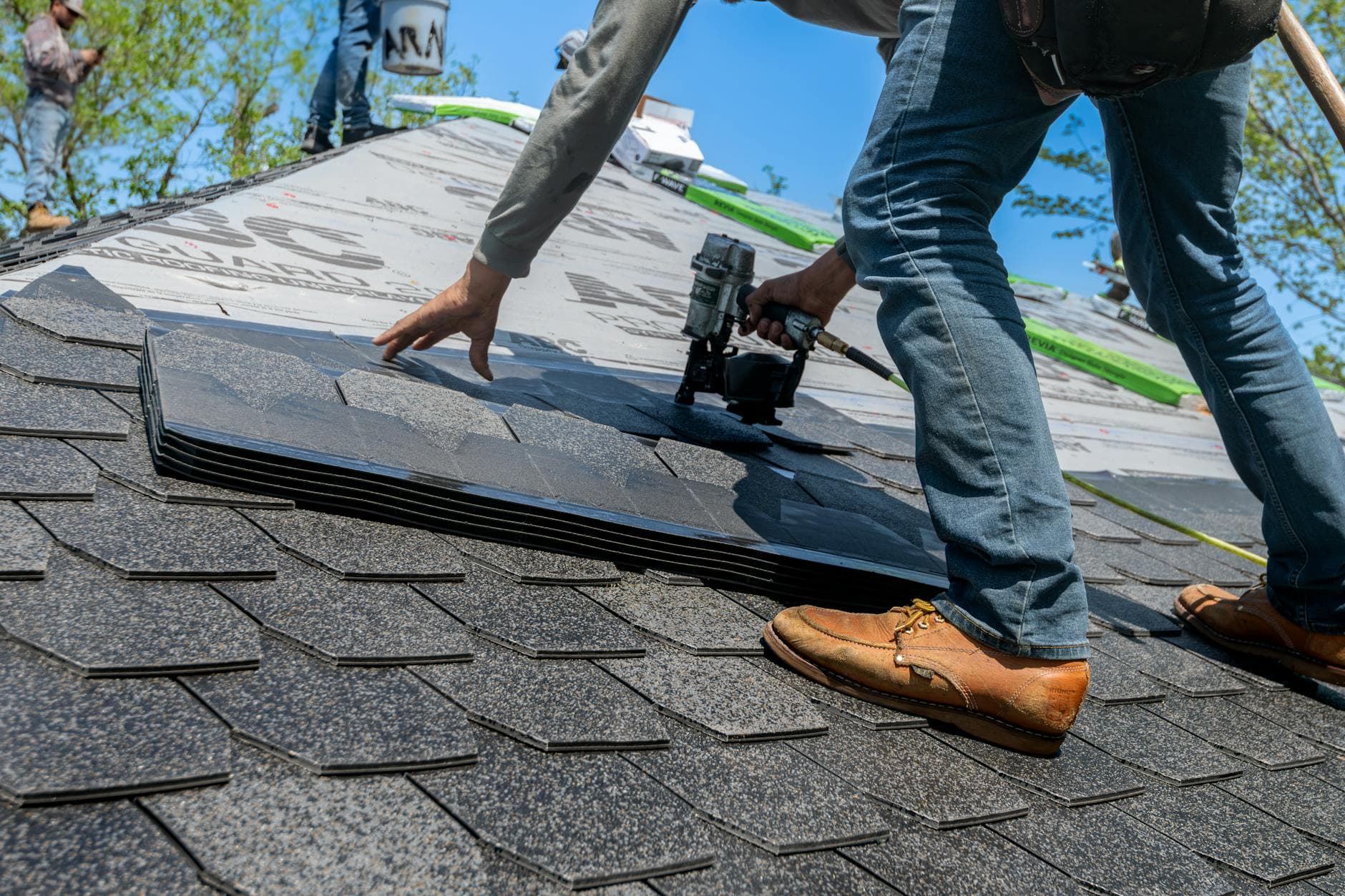
Full roof replacement for asphalt shingle, metal, tile, or flat systems: tear-off, decking inspection, underlayment, and new covering installed by a vetted local crew.
Profile your project, get a tailored checklist, and meet vetted Houston pros who specialize in your exact scope.
Get matched with vetted prosRoof replacement in Houston is a wind-zone, heat, and storm-cycle decision
Replacing a roof in Houston is not a generic asphalt-shingle job. The metro sits inside the Atlantic hurricane basin and most of southern Harris, Fort Bend, Brazoria, and Galveston counties fall into the Texas Department of Insurance designated catastrophe area, where any roofing work that touches the wind envelope must be performed or inspected by a TDI-appointed contractor and certified via the WPI-8 form before Texas Windstorm Insurance Association coverage activates. On top of that, attic temperatures across the metro routinely push 130–150°F in July and August, taking 10–20% off the published lifespan of an unventilated asphalt roof per NRCA field data. Specifying the right material, the right install, and the right contractor for these conditions is the entire job.
If your Houston roof is past 15 years old, has lost shingles in any wind event since Hurricane Beryl in 2024, or hasn't been inspected since the May 2024 derecho, get matched with screened Houston replacement pros — most network contractors offer a free written inspection and a no-obligation replacement scope.
Why Houston roofs wear out faster
Three local conditions compress the lifespan of an unspecified asphalt roof in the Houston metro:
- UV and heat. South-facing slopes receive the most concentrated solar load in the country outside of Phoenix and Las Vegas. Without balanced soffit-and-ridge ventilation, attic temperatures cook shingles from below and accelerate granule loss across the field.
- Wind-uplift events. The metro experiences sustained 50–70 mph winds multiple times per year from frontal systems, plus the named-storm risk from June to November. Hurricane Beryl in July 2024 and the May 2024 derecho both produced widespread shingle-uplift damage across The Heights, Memorial, Bellaire, and Spring; insurers paid hundreds of thousands of claims and many homeowners discovered that 110-mph wind-rating shingles weren't enough.
- Hail and pop-up storms. While DFW dominates the hail headlines, Houston-area severe weather produces 1–1.5" hail in 1–3 events per year, primarily in northern and western suburbs. Class 4 impact-rated shingles are not overkill in this market — they're the right floor for any homeowner planning to stay past one storm cycle.
The combined effect: a generic 110-mph architectural asphalt roof in Houston commonly hits 17–22 years of useful life. A Class H (130-mph) Class 4 impact-rated install with full ventilation upgrade hits 25–30+. The product upcharge is small; the lifecycle delta is large.
Material recommendations for Houston roofs
For most Houston single-family homes, the right replacement spec is a Class H (130-mph) wind-rated, Class 4 (UL 2218) impact-rated architectural asphalt shingle with full balanced ventilation, ice-and-water shield in valleys and around penetrations, ring-shank deck nailing, and a sealed-deck synthetic underlayment. Major brands meeting that spec — GAF Timberline AS II, CertainTeed Landmark Class IV, Owens Corning Duration Storm — install at the same price point as standard architectural products in this market.
For homeowners staying 20+ years, standing-seam Galvalume metal (40–70 year lifespan, superior wind and heat performance, modern reflective coating systems that drop attic temperatures meaningfully) is the longer-lifecycle choice and increasingly common on Heights renovations and Memorial-area new builds. The upfront-cost gap rarely pays back inside a 7-year ownership window; past 12 years it almost always wins. See our asphalt vs metal roof guide for the structured comparison.
For Spanish Colonial, Mediterranean, and master-planned subdivisions in parts of Sugar Land, The Woodlands, and Cinco Ranch, clay or concrete tile remains the right call where HOA covenants require it and the structure is rated for the dead load. Plan a "lift and relay" of the underlayment at the 25–35 year mark even though the tile itself outlasts that.
Houston-specific install requirements
Beyond the material spec, four install items are non-negotiable in this market:
- TDI WPI-8 certification for any property in the designated catastrophe area. Without it, TWIA coverage isn't available — and TWIA is the insurer of last resort for many coastal-county homeowners. A TDI-appointed inspector or TDI-qualified roofer issues the WPI-8 after wind-load inspection. Network contractors we route in coastal counties carry the credential.
- Permits. The City of Houston requires a residential roofing permit through Houston Permitting Center for tear-off and reroof projects, with mid-progress inspection before the final layer. Outside city limits, Harris County and surrounding counties have parallel requirements. No legitimate Houston roofer skips this.
- Ventilation upgrade. Most Houston roofs over 15 years old are under-ventilated for the local climate. A full replacement is the moment to install balanced soffit intake and continuous ridge exhaust, sized to the attic volume per Section R806 of the IRC. The ventilation upgrade adds modest cost and adds 5–8 years to the new roof's effective life.
- Decking inspection. Older Heights and Montrose homes often have plank decking with gaps too wide for modern shingle nail-pull strength. The contractor should overlay 7/16" OSB or replace planks where needed before any underlayment goes down.
Neighborhoods we replace roofs in
Demand patterns vary by zone:
- The Heights and Montrose — older bungalows with steep pitches, original plank decking, and frequent flat-deck rear additions. Typical replacement: tear-off architectural asphalt with full deck overlay and ridge ventilation upgrade; flat-deck rear sections often go to TPO at the same time.
- Memorial, Bellaire, and Tanglewood — 1990s–2000s asphalt roofs hitting end of life now. Typical replacement: 25–35 sq Class 4 architectural with full ventilation rebuild.
- Katy, Sugar Land, and The Woodlands — master-planned communities with mixed asphalt and tile. Typical replacement: post-Beryl wind-damage carrier-coordinated work; tile underlayment "lift and relay" on 25+ year tile.
- Spring, Cypress, and Tomball — younger asphalt roofs but heavy hail exposure on the western edge. Typical replacement: Class 4 impact-rated upgrade with carrier hail-deductible discount paperwork.
- Galveston, League City, and Clear Lake — coastal exposure plus TWIA jurisdiction. Typical replacement: TDI WPI-8 certified install with sealed-deck membrane and Class H shingle.
Insurance and replacement
A meaningful share of Houston replacement work runs through homeowner insurance after a named storm or wind event. The right contractor knows the supplement workflow — adjusters' first scopes routinely miss code-required upgrades, full-slope replacement instead of partial, and decking that the shingle cover hides until tear-off. Network contractors we route for carrier-coordinated work have documented insurance-supplement experience and Haag-certified inspectors where needed. See our does insurance cover roof replacement guide for the full filing-to-payment workflow and our Houston storm damage repair page for the storm-claim-specific process.
What drives the cost of a Houston replacement
We don't publish dollar amounts. Houston-specific cost drivers, in order of impact:
- Roof complexity and pitch — Heights bungalows with steep cut-up pitches cost meaningfully more per square than Memorial's simpler hip-and-gable layouts.
- Decking condition — older homes commonly need partial overlay or replacement; newer subdivisions usually don't.
- TDI / WPI-8 work — coastal-county jobs add inspection and certification time.
- Material spec — Class 4 impact-rated upcharge is small; metal and tile are larger lifts.
- Permit fees and city — Houston, surrounding incorporated cities, and Harris County all have different fee schedules.
- Crew availability after storm events — post-Beryl and post-derecho windows compress crew availability; off-cycle scheduling is cheaper.
The honest comparison: get multiple quotes from screened Houston pros on the same scope. Get matched with replacement specialists and the roof replacement match tool profiles your project before the conversation.
How we vet Houston replacement contractors
Every contractor in our Houston network for replacement work clears: license registration where applicable, one-million-dollar-or-higher general liability, current Texas workers' comp, manufacturer-installer credentials (GAF Master Elite, CertainTeed SELECT ShingleMaster, or equivalent), background-check documentation, a 4.0+ aggregated review-score floor, and verifiable Houston-area work history (no out-of-state storm chasers). For coastal-county work, additional TDI appointment and WPI-8 certification.
FAQ
Do I need a permit to replace my roof in Houston?
Yes. The City of Houston requires a residential roofing permit through the Houston Permitting Center for any tear-off and reroof project, with mid-progress inspection before the final shingle layer goes on. Your contractor pulls the permit; verify the permit number before crews start. Outside city limits, Harris, Fort Bend, Montgomery, and Brazoria counties have parallel requirements.
What is the WPI-8 and do I need it?
WPI-8 is the windstorm-inspection certificate issued by a TDI-appointed inspector or qualified roofer after a wind-envelope inspection on properties inside the TDI designated catastrophe area. Most of Galveston County, parts of Brazoria, and coastal Harris County require it for Texas Windstorm Insurance Association coverage. If you're in those zones, your roof job must be done by a TDI-appointed contractor or inspected and certified by one.
What roof material lasts longest in Houston?
For lifecycle: standing-seam Galvalume metal at 40–70 years, with strong wind, heat, and hail performance. For lowest-friction insurability and resale: Class H wind-rated, Class 4 impact-rated architectural asphalt shingle at 25–30+ years effective. For HOA-required tile neighborhoods: clay or concrete tile at 50–100 years on the tile, with underlayment lift-and-relay every 25–35.
How does Hurricane Beryl affect my replacement timing?
Many Houston roofs damaged by Beryl in July 2024 are still in the carrier-claim and replacement queue through 2025 and into 2026. If your roof was damaged and you haven't filed, the TWIA filing window for Beryl is 1 year from the date of loss for that storm — confirm the cutoff with your carrier or the TDI consumer help line before letting it lapse. Get an inspection now even if you think the damage is minor; functional damage often presents as failure 1–3 years after the event.
How fast can I get matched with a Houston replacement contractor?
Typical match time is under 60 seconds via the form on this page. First contractor contact is within one business day. For storm-damaged roofs needing emergency tarp before full replacement starts, we route to same-day-availability pros first.
Are Class 4 impact-rated shingles worth it in Houston?
For most homeowners, yes. The product upcharge is modest and several major Texas carriers offer hail-deductible discounts or premium credits for documented Class 4 installations. Past one bad hail event, a Class 4 roof is significantly more likely to survive without a claim trigger. The exception is sellers within 12 months who can't recover the spend at resale.
Neighborhoods we serve
- The Heights
- Memorial
- Bellaire
- Katy
- Spring
- Sugar Land
- The Woodlands
- Montrose
Other services in Houston
Repair in Houston
Repair from vetted Houston pros.
Storm Damage in Houston
Storm Damage from vetted Houston pros.
Gutters in Houston
Gutters from vetted Houston pros.
Siding in Houston
Siding from vetted Houston pros.
Flat Roofing in Houston
Flat Roofing from vetted Houston pros.
Metal in Houston
Metal from vetted Houston pros.
Replacement in nearby cities
Related guides and tools
Get matched with vetted replacement pros in Houston
Tell us about your project. We'll connect you with a local Houston contractor in one business day.