Guide
Asphalt vs Metal Roof: Cost, Lifespan, and Decision Guide
Everything homeowners need to know about asphalt vs metal roof. Sourced from licensed roofers and primary building-code references. Get matched with a vett...
By Daniel Reyes, Senior Editor, Building Science · Last reviewed 2026-05-08
Get matched with vetted prosQuick answer
Asphalt shingles and standing-seam metal are the two dominant residential roofing systems in the United States, and the choice between them is a tradeoff across six axes: lifespan, durability under wind and hail, climate fit, energy efficiency, aesthetics, and maintenance. Architectural asphalt shingles last 25 to 40 years, install on virtually any roof shape, and match traditional neighborhoods on aesthetic; they are the default for a reason. Standing-seam metal lasts 40 to 70 years, sheds snow and water more effectively, performs better under hail and high wind when impact-rated, and pairs well with modern or rural aesthetics — but installation is more specialized and the upfront cost is meaningfully higher per square. For most U.S. homes, asphalt is the right call: when budget is mid-range, the roof shape is gabled or steep, the climate is moderate, and you expect to be in the home 10 to 20 years. Metal is the right call when you plan to stay 20+ years, the home is in a hail belt or hurricane coast, the roof has low-slope sections that asphalt cannot handle well, or you specifically want the modern profile and long lifecycle. Neither is universally better. To weigh these factors against your actual roof and climate zone, run the Roofing Materials Comparison Tool and the Roof Lifespan Estimator.
Lifespan comparison
Lifespan numbers below come from the National Roofing Contractors Association, the Metal Construction Association, and published manufacturer warranty schedules from GAF, CertainTeed, and Owens Corning.
Asphalt shingle lifespan
- 3-tab shingle: 20 to 30 years. Single-layer, lightest weight, lowest wind rating. Less common in new installs today.
- Architectural / dimensional shingle: 25 to 40 years. Laminated multi-layer construction, the dominant choice for U.S. residential roofs. Most major manufacturers carry "limited lifetime" warranties that pro-rate aggressively after the first decade.
- Premium designer / impact-rated (Class 4): 30 to 50 years. Heavier mat, polymer-modified, often paired with insurance discounts in hail belts.
Metal roof lifespan
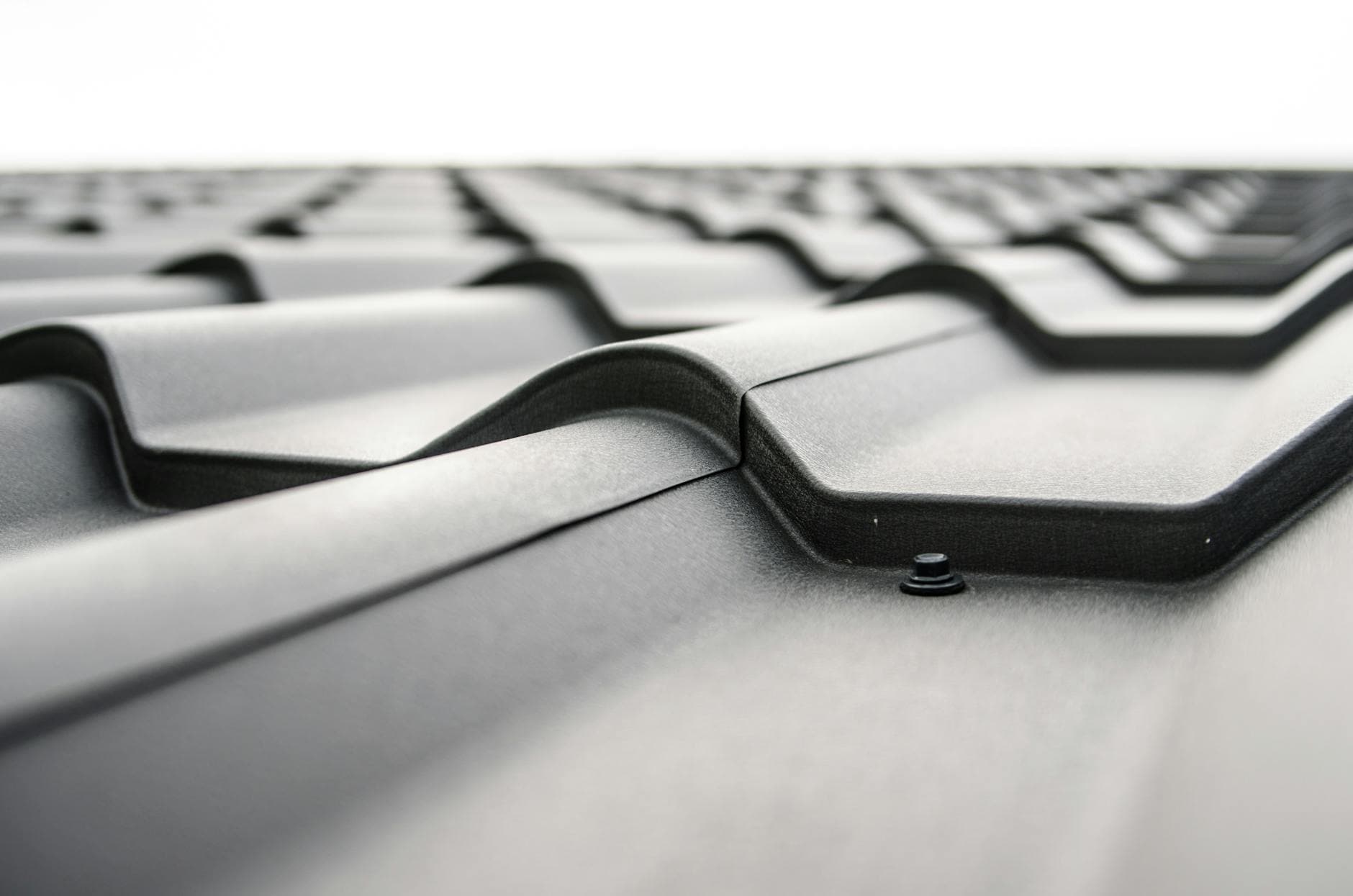
- Standing-seam metal (Galvalume, aluminum, steel): 40 to 70 years. Concealed-fastener seam profile sheds water and accommodates thermal expansion; finish coatings (PVDF / Kynar 500) commonly carry 30-year fade-and-chalk warranties.
- Stone-coated steel: 40 to 60 years. Pressed-stone aesthetic, behaves more like a tile/shake roof in shedding pattern.
- Corrugated exposed-fastener metal: 25 to 40 years. Cheapest metal option; weak point is the gasketed fastener, not the panel — gaskets fail before the metal does and need re-fastening cycles.
The takeaway: a standing-seam metal roof commonly outlasts two complete asphalt re-roofs on the same house. If you're deciding based on a 30-year window, both materials will likely make it. If you're deciding for the long term, metal pulls clearly ahead.
Wind, hail, and fire performance
The relevant ratings are wind rating (mph), the UL 2218 impact rating (Class 1 to Class 4), and the UL 790 fire rating (Class A is the highest). Underwriters Laboratories publishes the test methods; the Insurance Institute for Business and Home Safety (IBHS) publishes field-research data on real-world performance.
Wind
- Architectural asphalt shingle: 110 to 150 mph rated, depending on product and nail pattern. Six-nail installation gets the high end; four-nail installation gets the low end. After hurricane and tornado events, IBHS field studies repeatedly show that the failure mode is shingle blow-off at the eave course, not failure across the field.
- Standing-seam metal: 140 to 180+ mph rated, depending on panel gauge, clip spacing, and seam type. Mechanically seamed panels outperform snap-lock in extreme wind. Failure mode is uplift at the perimeter, which is why hurricane-coast installs use enhanced perimeter clip schedules.
Hail
- Standard architectural asphalt shingle: typically Class 1 or Class 2 — sufficient for moderate hail, vulnerable to anything golf-ball-sized or larger.
- Class 4 impact-rated asphalt shingle: passes a 2-inch steel-ball drop without cracking the mat. Most major manufacturers offer one, and many hail-belt insurers discount premiums up to ~25 percent for Class 4 installs.
- Standing-seam metal: dents cosmetically under large hail but rarely fails functionally. Field studies after major Texas and Colorado hail events consistently show metal roofs intact after asphalt roofs in the same neighborhoods are totaled. Watch the cosmetic-damage exclusion on your policy — see our insurance-coverage guide.
- Stone-coated steel: among the best hail performers because the embedded stone absorbs impact energy.
Fire
- Asphalt shingle (most modern products): Class A when applied over an approved deck.
- Metal: Class A by virtue of the material itself.
- Wood shake / cedar: Class C unless treated and assembled to a Class A system. Worth knowing because fire-prone-state insurance often excludes untreated wood.
The practical implication: in hail-belt states (Texas, Oklahoma, Colorado, Nebraska, the Great Plains), Class 4 asphalt or stone-coated steel earns its premium back through insurance discounts and avoided claims. On the hurricane coast, mechanically seamed metal or six-nail Class H asphalt is the right floor.
Climate fit
Different climate zones reward different systems. Use this as a starting matrix; the Roofing Materials Comparison Tool personalizes it for your ZIP.
- Hot-humid (Gulf Coast, Florida, Carolinas): metal performs better long-term. Asphalt loses 10 to 20 percent of expected life from UV and granule shedding. Algae streaking is a near-universal asphalt issue south of the Mason-Dixon line; algae-resistant shingles help but don't eliminate it. Metal is also less hospitable to mold and mildew growth.
- Hot-dry (Phoenix, Las Vegas, inland Southern California): metal and tile both outperform asphalt. Cool-roof certified metal coatings reflect a meaningful share of solar heat. Asphalt lasts but loses life faster than the moderate-climate baseline.
- Cold and snow (Minneapolis, Buffalo, Denver, New England): standing-seam metal sheds snow effectively and resists ice damming better than asphalt — though that snow-shedding behavior requires snow guards if there's a walkway or driveway directly below the eave. Asphalt with a high-quality ice-and-water shield underlayment from eave to 24 inches inside the warm wall is a fine choice if your roof has a steep enough pitch and adequate attic ventilation.
- Hurricane coast: mechanically seamed metal or Class H wind-rated asphalt with six-nail installation. Standing-seam outperforms in extreme uplift; the install needs to specify a hurricane-coast clip schedule.
- Hail belt: Class 4 impact-rated asphalt or stone-coated steel. Standard architectural shingles will be totaled by the next major event regardless of age.
If your home spans climate categories (a Texas market that gets both hail and hurricane risk, for instance), the Roofing Materials Comparison Tool weights the tradeoffs and surfaces the right primary recommendation for your ZIP.
Energy efficiency and cool-roof certifications
Roof color and surface emissivity meaningfully affect cooling load in hot climates. The ENERGY STAR Roof Products program certifies products that meet defined solar reflectance and thermal emittance thresholds; the Cool Roof Rating Council (CRRC) maintains a third-party rated-product directory.
- Cool-roof asphalt shingle: lighter colors with reflective granules. Available from all major manufacturers; the energy savings are real but modest in moderate climates and meaningful only in hot-dry / hot-humid zones.
- Cool-roof metal: PVDF coatings in lighter colors are rated as some of the most reflective roofing surfaces available. Metal also re-radiates absorbed heat faster than asphalt because of low thermal mass — meaning attic temperature drops faster after sundown.
- Federal energy efficient home improvement credit: the IRS energy-efficient home improvement credit (Section 25C) historically allowed a percentage credit for ENERGY STAR-rated metal and asphalt roofs; rules and product eligibility have changed across tax years and should be confirmed with a tax professional and the IRS publication current at install time.
In hot climates, choose a cool-roof certified product regardless of which system you pick. The lifecycle electricity savings are real and the upfront premium is small.
Sound: is metal really louder?
This is the most common metal-roof myth. The honest answer: a properly installed metal roof on a residential structure is quieter than most homeowners expect, and only marginally noisier than asphalt under heavy rain.
The factors that flatten the noise gap:
- Solid decking (5/8" plywood or OSB) versus open-purlin barn construction. Residential metal goes over solid decking, which damps panel resonance dramatically.
- High-quality synthetic underlayment or ice-and-water shield under the panels. Adds another mass-spring damping layer.
- Attic insulation (R-38 to R-60 in most code-compliant homes) and the ceiling drywall layer below it. By the time sound reaches occupied rooms, the differential is 5 dB or less.
Where metal genuinely is louder is open-soffit construction — porches, sheds, barns, screened pavilions. There, the panel rings because there's nothing absorbing the resonance. For a finished house with normal insulation and underlayment, the rain-on-metal experience is closer to "noticeable" than "annoying."
Aesthetics and curb appeal
Aesthetic preference is personal, but neighborhood fit affects resale value. A few honest observations:
- Architectural asphalt is the visual baseline for most U.S. neighborhoods. It blends, it disappears, it doesn't fight the trim or the siding. For traditional, suburban, and most colonial / craftsman / ranch homes, this is a feature.
- Standing-seam metal reads modern, agricultural, or mountain-rustic depending on color and trim. It pairs beautifully with contemporary architecture, board-and-batten siding, and homes with strong horizontal lines. It can clash on traditional center-hall colonials in dense suburban tracts.
- Stone-coated steel mimics tile or shake convincingly from street level and reads conventional, not industrial. A useful option in HOA neighborhoods that allow tile but not standing-seam.
Resale impact varies by region. In hail-belt and hurricane markets, metal is increasingly a buyer feature, not a friction. In conservative HOA neighborhoods, check the architectural review committee's approved-materials list before falling in love with a profile.
Maintenance differences
Both systems benefit from annual inspection, gutter cleaning, and prompt repair of small flashing issues. Beyond that:
- Asphalt maintenance is mostly about treating algae, replacing shingles displaced by wind, and re-sealing flashing penetrations. Repairs are cheap and any roofer can do them.
- Metal maintenance is mostly about re-sealing penetrations every 10 to 15 years, addressing fastener gasket issues on exposed-fastener systems, and touch-up paint for scratches. Repairs require a metal-experienced installer; not every general roofer is fluent in seam profiles.
Over a 30-year window, total maintenance hours and costs are comparable. The asphalt cost shows up as small, frequent repairs. The metal cost shows up as fewer, larger periodic events.
When asphalt is the right call
Choose architectural asphalt when:
- Budget is mid-range and the priority is coverage, not lifecycle.
- You expect to be in the home for less than 20 years.
- The roof is gabled, hipped, or steeply pitched (asphalt installs cleanly on virtually any pitch above 4:12).
- The neighborhood aesthetic is traditional and HOAs constrain alternative profiles.
- The climate is moderate (no major hail belt, no hurricane coast, no severe winter snow load).
- You want a Class 4 impact-rated upgrade with insurance discounts but don't want to step up to metal.
For most U.S. roof replacements, asphalt remains the default — and that's a reasonable default. Pair it with quality underlayment, six-nail installation, and proper attic ventilation and you'll get the high end of the lifespan range.
When metal is the right call
Choose standing-seam metal (or stone-coated steel) when:
- You plan to be in the home for 20+ years and want to amortize the lifecycle.
- The home is in a hail belt and you're tired of cyclical claim disputes.
- The home is on the hurricane coast and you want the wind-uplift edge.
- The roof has low-slope sections (below 3:12) that asphalt can't span — metal goes lower than shingles will.
- The home's architectural style fits standing-seam (modern, contemporary, farmhouse, mountain).
- You want long-term predictability over short-term price.
- The home has solar panels planned — metal's longer life lines up with the solar system's lifecycle, eliminating the "tear off solar to replace roof at year 18" problem.
For region-specific discussion, see our Houston roof replacement guide (hurricane coast and hail), Dallas roof replacement guide (hail belt), and the metal-roofing service hub. To compare costs and durability for your specific situation, run the Roofing Materials Comparison Tool and get free quotes from licensed local pros — pricing varies enough by local labor, tear-off complexity, and material availability that we don't publish numbers in this guide.
FAQ
Will a metal roof attract lightning?
No. The Metal Construction Association and the National Lightning Safety Council both confirm that metal roofs do not attract lightning more than other materials. If lightning does strike, metal actually disperses the energy more safely than combustible roofing — it's non-combustible, conductive, and tends to direct the strike rather than ignite. Lightning rod systems are recommended on tall structures or isolated rural homes regardless of roof material, not because of the metal itself.
Do asphalt shingles weaken in hot climates?
Yes — to a measurable degree. UV exposure, thermal cycling, and high attic temperatures all accelerate granule loss and mat embrittlement. In hot-humid and hot-dry climates, expect to shave roughly 10 to 20 percent off published lifespan ranges. The single biggest mitigation is attic ventilation: an under-ventilated attic can run 30 to 50°F hotter than the outdoor air, and that heat cooks shingles from below. Gable + ridge or soffit + ridge ventilation balanced to code requirements is a higher-leverage move than upgrading to a "premium" shingle.
Can I install metal over existing asphalt?
Sometimes, but it's not the default and it requires structural and code review. Some metal panel systems are engineered for over-shingle installation with furring strips that create an air gap; building codes in your jurisdiction govern whether the existing layer counts toward the maximum number of roof layers (most U.S. codes cap residential roofs at two layers total). A tear-off is usually the cleaner path because it lets the installer inspect and replace the deck where needed. Talk to a licensed metal-roofing pro before assuming an overlay is feasible.
Is metal worth the cost difference?
It depends on local labor, tear-off complexity, the roof's geometry, and how long you'll be in the home. The cost difference between architectural asphalt and standing-seam metal varies widely by market — by enough that any guide-level number we'd publish would mislead you. The right move is to get free quotes for both materials from licensed local pros and compare on lifecycle, not on upfront. Get matched in your ZIP and run the Roofing Materials Comparison Tool for a structured comparison.
Does metal raise or lower home resale value?
In most markets, neutral to slightly positive — and increasingly positive in hail and hurricane regions where buyers are aware of insurance friction with old asphalt roofs. In conservative-HOA suburban neighborhoods where every house has architectural shingles, an unconventional metal profile can be a small friction at resale; stone-coated steel that mimics tile or shake reads as conventional and avoids that friction. In rural, modern, and farmhouse markets, standing-seam is now a buyer-feature talking point.
What's the noise difference in heavy rain?
For a properly built modern home — solid decking, quality underlayment, attic insulation, drywall ceiling — the difference at occupant level is small (typically a few decibels) and often imperceptible against the ambient sound of rain on windows and ground. The "loud metal roof" reputation is real for open-soffit barns and uninsulated outbuildings; it doesn't transfer to a finished, insulated house.
This guide was written by the Local Roofing Help Editorial Team and reviewed by a licensed roofing contractor. Last reviewed: 2026-05-08. Comparing asphalt and metal for your home? Run the Roofing Materials Comparison Tool, estimate your roof's remaining lifespan, and get matched with a vetted local pro for free quotes on both materials.
Need a vetted local roofer?
Tell us about your project and we'll connect you with a local pro.